How to Stay Consistent With Fitness During Busy Seasons ⏰💪
May 15, 2026
by Christopher windbigler
There is a point every year where life speeds up.
Work gets heavier. Family schedules get packed. Travel increases. Energy drops. Your routine starts slipping.
This is where most people lose momentum with fitness.
Not because they stopped caring. Because their old routine only worked when life was easy.
The real challenge is not starting a fitness plan when you are motivated. The real challenge is maintaining consistency when life becomes unpredictable.
That is what actually determines long-term results.
Why Busy Seasons Destroy Most Fitness Routines
Most workout plans are built for ideal conditions.
- Perfect energy
- Perfect schedule
- Perfect motivation
Real life does not work like that.
When schedules get busy, people tend to make one of two mistakes.
They either stop training completely or try to maintain an unrealistic routine that they cannot sustain.
Both approaches fail.
The people who stay fit long term understand something important.
Consistency during hard seasons matters more than perfection during easy ones.
What Most People Get Wrong About Consistency
People think consistency means never missing a workout.
That is not realistic.
Consistency actually means returning quickly when life interrupts your routine.
Missing one workout is normal. Missing three weeks because you feel guilty about one missed workout is where progress disappears.
This mindset shift matters.
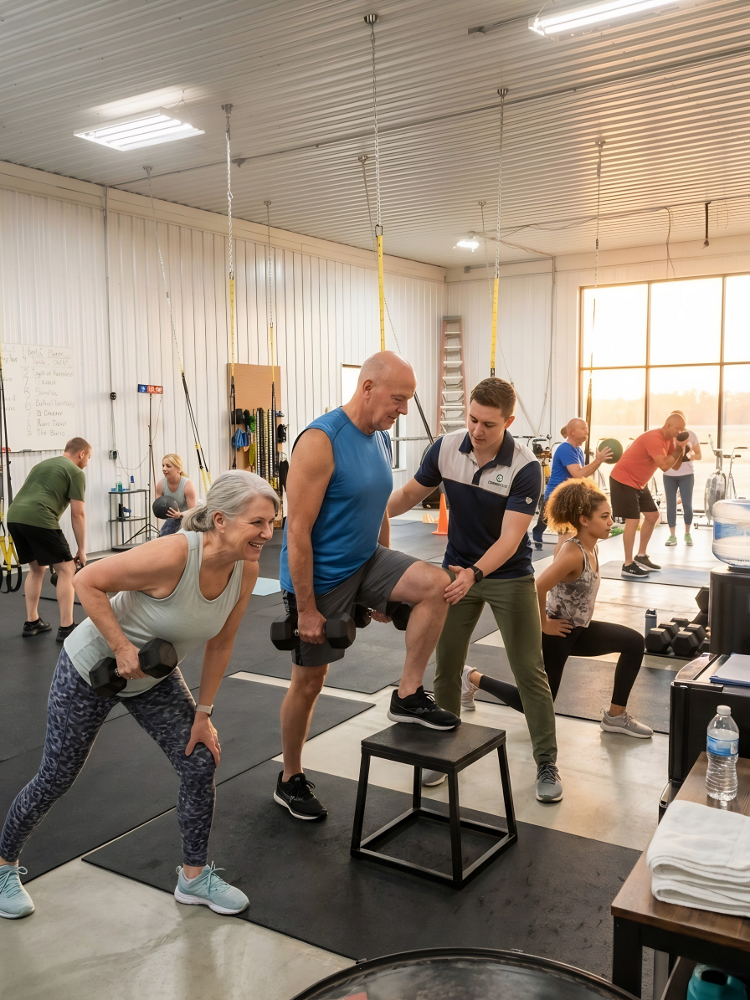
At Bare Fitness, one of the biggest goals of Small Group Training is helping members build routines that survive real life, not routines that collapse the second things get busy.
The Problem With All or Nothing Thinking
This is one of the biggest fitness killers.
People think:
If I cannot train five days a week, there is no point
If my nutrition is not perfect, I have already failed
If I miss a session, I ruin my progress
That thinking creates inconsistency.
A shorter workout still counts.
A moderate workout still helps.
Showing up imperfectly still moves you forward.
Long-term fitness is built through adaptability, not perfection.
How to Stay Consistent When Your Schedule Gets Busy
🗓️ Schedule Workouts Like Appointments
If workouts only happen “when you have time,” they usually do not happen.
People protect scheduled commitments differently from vague intentions.
Block training sessions into your calendar the same way you would meetings or appointments.
Members using Personal Training Services often succeed because accountability removes daily decision-making. They know exactly when they are training and what they are doing.
⏱️ Stop Waiting for the Perfect Workout
One of the biggest mistakes busy people make is believing workouts need to be long to matter.
They do not.
A focused thirty-minute session done consistently beats random two-hour workouts done occasionally.
During stressful seasons, efficiency matters more than volume.
This is where structured Strength Training Programs become valuable. You stop wasting time guessing what to do and start maximizing the time you actually have.
🔁 Reduce Friction Wherever Possible
The harder your routine is to maintain, the easier it is to skip.
Simple changes matter:
- Prepare gym clothes the night before
- Choose consistent workout times
- Train near work or home
- Follow a structured plan instead of improvising
The goal is to make showing up easier than skipping.
🧠 Focus on Maintenance During Stressful Periods
This is something most people misunderstand.
You do not need to make massive progress during every season of life.
Sometimes the goal is simply maintaining momentum.
If work is stressful or your schedule is overloaded, maintaining strength, energy, and consistency is already a win.
That mindset prevents burnout and keeps you connected to your routine.
Why Community Matters More During Busy Seasons
When life gets chaotic, isolation makes consistency harder.
This is where community becomes powerful.
Training around people who expect you to show up changes behavior. Encouragement matters more when motivation is low.
With Functional Fitness Training, members are not just following workouts. They are part of an environment that helps them stay engaged even during stressful periods.
That support system often becomes the difference between staying active and disappearing for months.
Real World Example of Sustainable Fitness
Here is what sustainable consistency actually looks like.
Person A: trains aggressively for six weeks, burns out, disappears for two months, then restarts.
Person B: trains three times per week consistently, adjusts during busy periods, and keeps showing up year-round.
Person B: wins every time.
Not because they are more motivated.
Because they built a routine they could actually sustain.
Common Mistakes Busy People Make
Trying to make up missed workouts
This usually leads to exhaustion and inconsistency.
Changing routines constantly
Constantly restarting destroys momentum.
Treating stressful seasons like failure
Life changes. Your routine should adapt to it.
Waiting for motivation
Motivation is unreliable. Systems matter more.
Ignoring recovery
Poor sleep and high stress already tax the body. Recovery becomes even more important during busy periods.
A Simple Consistency Framework
If life feels overwhelming, simplify fitness down to this:
- Train two to four times weekly
- Prioritize strength training
- Keep workouts efficient
- Maintain basic nutrition habits
- Focus on momentum, not perfection
This approach is sustainable. Sustainability creates results.
FAQ
How many workouts per week are enough during busy seasons?
Two to four structured sessions per week are enough to maintain and even improve fitness for most people.
Is a short workout still effective?
Yes. A focused thirty-minute workout is far more effective than skipping exercise entirely.
How do I stay motivated to work out when busy?
Reduce decision fatigue, follow a schedule, and train in an environment with accountability and support.
What is the best type of training for busy adults?
Structured strength and functional fitness training are highly effective because they maximize efficiency and long-term sustainability.
Conclusion
Busy seasons are not the problem.
The real problem is relying on routines that only work when life is easy.
Fitness becomes sustainable when you stop chasing perfection and start building consistency around real life.
That means structured workouts, realistic expectations, accountability, and support.
At Bare Fitness, the goal is not just to help people train hard.
It is helping people stay consistent long enough to actually change their lives.
If you are ready to build a routine that works even when life gets busy, explore Customized Fitness Programs and discover how structured coaching can help you stay on track year-round.