How to Break Through a Fitness Plateau and Start Seeing Progress Again 🚀💪
Aug 1, 2026
by Christopher windbigler
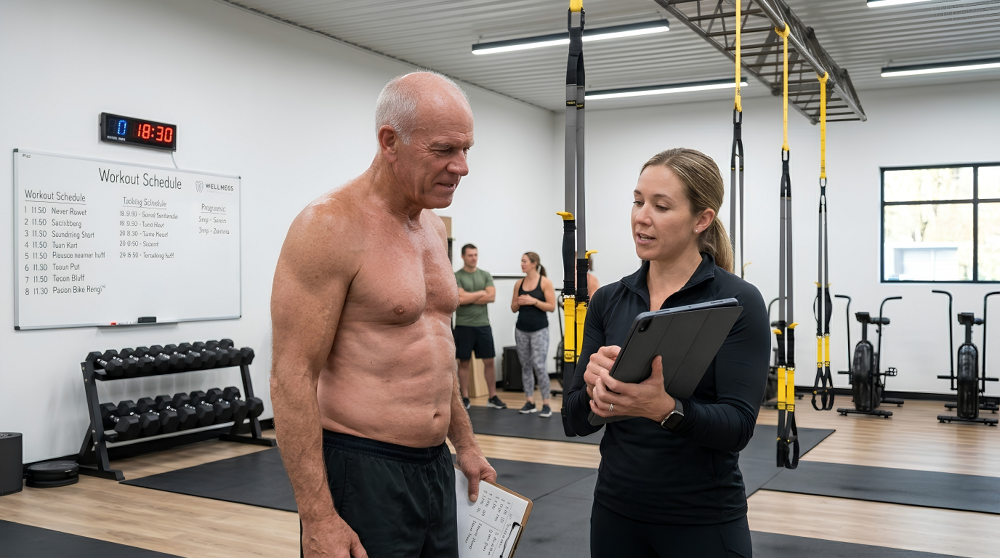
You have been showing up consistently. You are following your workout routine. You are putting in the effort.
But suddenly, the results stop.
The weight on the bar does not increase.
Your energy feels flat.
The scale refuses to move.
If this sounds familiar, you are probably experiencing a fitness plateau.
The good news is that a plateau is not a sign of failure. It is often a sign that your body has adapted to your current routine. The solution is not working harder. It is training smarter.
Let us explore why plateaus happen and what you can do to move forward with confidence.
🧠 What Is a Fitness Plateau?
A fitness plateau happens when your body becomes efficient at the workouts you have been doing.
At first, almost any new exercise creates noticeable improvements because your body is adapting to an unfamiliar challenge.
Over time, however, your muscles, nervous system, and cardiovascular system adjust. The same workout that once pushed you now feels routine.
Progress slows because your body no longer has a reason to change.
This is a normal part of every fitness journey.
🚩 Signs You Have Reached a Plateau
Not every slow week is a plateau, but these signs usually indicate it is time to make adjustments.
Your strength has not improved for several weeks.
Your workouts feel repetitive.
Your energy and motivation are lower than usual.
Your endurance has stopped improving.
Your body composition has remained unchanged despite consistent effort.
Recognizing these signs early helps you make small adjustments before frustration sets in.
💪 Stop Doing the Same Workout Every Week
One of the most common reasons people stop progressing is repeating the exact same routine month after month.
Your body thrives on progressive challenge.
That does not mean changing every exercise every week.
It means gradually increasing difficulty through better programming.
This might include:
- Increasing resistance
- Adding repetitions
- Improving movement quality
- Reducing rest periods
- Learning more advanced variations
Structured Strength Training Programs are designed to make these adjustments at the right time, helping members continue progressing without feeling overwhelmed.
🔁 Recovery Could Be the Missing Piece
Many people assume a plateau means they need to train more.
Often, the opposite is true.
If your body is constantly fatigued, it cannot adapt properly.
Ask yourself:
- Am I getting enough sleep?
- Am I drinking enough water?
- Am I taking recovery days?
- Am I eating enough protein?
Better recovery often leads to better performance.
🍎 Nutrition Matters More Than Most People Think
Your workouts create the opportunity for progress, but nutrition supports that progress.
If your goal is building strength, your body needs enough protein and overall energy.
If your goal is fat loss, small nutrition habits often have a greater impact than adding another workout.
Many plateaus happen because people continue eating the same way while their training demands change.
Fuel should evolve with your goals.
🏋️ Focus on Better Movement Before More Weight
Adding weight is exciting, but it is not the only measure of progress.
Improving technique often unlocks new strength.
Better posture.
Improved balance.
Greater stability.
More efficient movement.
These improvements reduce injury risk and prepare your body for heavier loads later.
With Personal Training Services, coaches can identify movement patterns that may be limiting your progress and provide corrections that create lasting improvements.
👥 Train With People Who Push You
It is easy to stay inside your comfort zone when training alone.
A supportive training environment naturally encourages higher effort and better consistency.
Seeing others improve reminds you that progress is possible.
Receiving encouragement during difficult workouts often helps you accomplish more than you expected.
That is one reason Small Group Training creates such effective long-term results. Coaching and community work together to keep members progressing.
📈 Track More Than the Scale
One mistake many people make is using body weight as their only measure of success.
Real progress includes:
- Strength gains
- Improved endurance
- Better mobility
- Higher energy levels
- Better sleep
- Improved confidence
- Clothes fitting differently
If you only watch the scale, you may miss meaningful improvements happening everywhere else.
✅ A Simple Plateau-Breaking Checklist
When progress slows, ask yourself these questions.
Am I following a structured training program?
Have I challenged myself recently?
Am I recovering well?
Am I eating to support my goals?
Have I been consistent over the past month?
Am I measuring progress in multiple ways?
Small improvements in these areas often restart progress without dramatic changes.
⚠️ Common Plateau Mistakes
Changing everything at once
Small adjustments are easier to evaluate and maintain.
Ignoring recovery
Fatigue often looks like lack of progress.
Comparing yourself to others
Your progress should be measured against your own starting point.
Program hopping
Constantly switching workouts prevents long-term adaptation.
Expecting progress every single week
Fitness is rarely perfectly linear. Some weeks build the foundation for future breakthroughs.
❓ FAQ
How long does a fitness plateau last?
It depends on the cause. Many plateaus improve within a few weeks after adjusting training, recovery, or nutrition.
Should I work out more during a plateau?
Not necessarily. Sometimes improving recovery or changing workout intensity produces better results than adding more sessions.
Can beginners experience plateaus?
Yes. While beginners often improve quickly, progress naturally slows as the body adapts.
Is a plateau a sign that my program is failing?
No. It usually means your body has adapted and your program needs thoughtful progression rather than a complete overhaul.
🎯 Conclusion
Every fitness journey includes periods where progress slows.
That does not mean you have reached your limit.
It simply means your body is ready for a new challenge.
The key is making smart adjustments instead of emotional ones.
Better programming, proper recovery, consistent nutrition, and expert coaching often turn frustrating plateaus into exciting breakthroughs.
At Bare Fitness, every workout is designed to evolve with you. Through Customized Fitness Programs, you receive structured guidance that keeps your training fresh, effective, and aligned with your goals so you can continue moving forward with confidence.