TRX Suspension Training for Beginners: What to Expect and How to Start
Nov 15, 2026
by Christopher windbigler
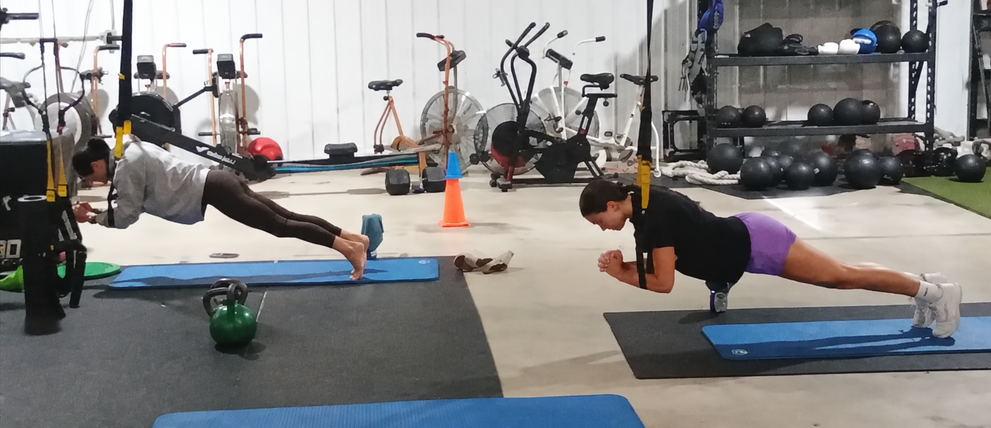
You walk into a gym and notice two adjustable straps hanging from an overhead anchor. Someone is holding the handles, leaning backward, and performing what looks like a standing row.
The equipment looks simple, but you might wonder whether you need exceptional balance or upper body strength to use it.
TRX suspension training can be suitable for beginners because many exercises can be adjusted to match your current strength, coordination, and experience. You do not need to be an athlete or have years of gym experience to begin.
However, using the equipment correctly matters. Your body position, the angle of each movement, and the stability of the anchor all influence the exercise.
At Bare Fitness in Elkhart, TRX suspension trainers are part of the equipment used in its Small Group Fitness and HIIT Classes. The gym also describes an assessment and hands-on instruction before participating in TRX classes.
Here is what you should understand before your first session.
What Is TRX Suspension Training?
TRX is a form of resistance training that uses adjustable straps, handles, and an appropriately secured anchor point.
Instead of relying entirely on dumbbells or weight machines, many TRX exercises use your body weight as resistance.
You can perform movements such as rows, supported squats, and selected pushing exercises by changing your body position relative to the straps.
For example, imagine holding the handles and leaning backward slightly while keeping your feet planted on the floor.
From that position, you can pull your body toward your hands to perform a row.
A more upright position generally makes this version easier. Leaning farther backward increases the portion of body weight you must move and typically makes the exercise more demanding.
That adjustability is one reason suspension training can work for people with different abilities.
💪 What Are the Benefits of TRX Training?
TRX offers a different way to challenge your muscles, but it is not a replacement for every other form of exercise.
It provides adjustable resistance
With many suspension exercises, changing your body angle changes the difficulty.
This allows a coach to select an easier or more challenging version without constantly changing equipment.
The adjustment is specific to the exercise, so moving your feet in a particular direction does not always have the same effect.
It challenges movement control
Suspension exercises often require you to control your trunk and body position while your arms or legs move.
A systematic review published in Sports Biomechanics examined muscle activation during suspension training. It found that several exercises can produce substantial upper body and trunk muscle activity, although the findings varied considerably across exercises and studies.
This means TRX can be a useful training tool, not that every suspension exercise is automatically superior to traditional strength training.
It adds variety to strength workouts
Some people enjoy learning movements with suspension straps because they feel different from familiar machine or dumbbell exercises.
TRX can also complement other equipment rather than replace it.
At Bare Fitness, the Small Group Fitness and HIIT program combines TRX with kettlebells, dumbbells, battle ropes, Airdyne bike intervals, and bodyweight exercises.
That variety gives participants opportunities to develop different aspects of fitness within a coached setting.
Is TRX Too Difficult for Someone Who Has Never Worked Out?
Not necessarily.
The important question is not whether TRX is easy or hard in general.
It is whether the specific exercise and setup are appropriate for you.
A beginner might start with a relatively upright standing row, while an experienced participant uses a more demanding body angle.
Someone learning a squat might use the handles for guidance while practicing controlled movement.
However, suspension straps are not automatically a safe support for every balance problem. Their movement and the way they are anchored matter.
If you have significant balance limitations, pain, or difficulty standing independently, a coach may recommend a more stable exercise option.
You should never assume that holding a suspended handle provides the same support as holding a fixed rail.
Three TRX Exercises Beginners May Learn
The following examples explain common movement options. They are not a complete workout prescription.
1. Standing TRX Row
A standing row trains pulling muscles in the upper body.
You hold the handles, position your feet on the floor, lean backward to an appropriate angle, and pull your body toward your hands.
A coach can help you find a position that allows controlled repetitions without excessive movement through your lower back.
Beginner consideration: Start more upright and focus on keeping your movement controlled.
2. Assisted TRX Squat
In this variation, the straps provide a handhold while you practice a squat movement.
The goal is not to pull your entire body upward using your arms.
Instead, you work on controlling the movement through your legs while using the handles as appropriate.
Beginner consideration: Choose a comfortable depth and avoid relying on the straps as a substitute for stable balance support.
3. TRX Chest Press
A standing suspension chest press challenges pushing muscles.
Your body faces away from the anchor, and your hands press through the handles as you control your position.
The exercise can become substantially more demanding as your body angle changes.
Beginner consideration: Use an upright position and have a coach check your alignment before progressing.
These exercises should be demonstrated and adjusted by a qualified trainer, particularly when you are unfamiliar with suspension equipment.
How to Make TRX Exercises Easier or Harder
One of the most useful things to learn is how to adjust an exercise rather than forcing yourself through a version that is too difficult.
| Training variable | Easier starting option | More challenging option |
|---|---|---|
| Standing row | More upright body angle | Greater backward lean |
| Standing chest press | More upright body angle | Greater forward lean |
| Repetitions | Fewer controlled repetitions | More repetitions when appropriate |
| Movement range | Comfortable, controlled range | Greater range when strength and mobility allow |
| Exercise complexity | Stable, simple movement | More demanding variation after mastering the basics |
Changing several variables simultaneously can make it difficult to understand why an exercise suddenly feels harder.
A better approach is to make one manageable adjustment and evaluate the result.
The same principle applies to other forms of strength training.
🏋️ What to Expect During Your First TRX Session at Bare Fitness
Bare Fitness provides a useful detail that beginners should know before attending.
According to its Frequently Asked Questions, new participants complete a workout assessment to identify appropriate exercise progressions or modifications.
The FAQ also states that TRX classes require an assessment and hands-on instruction with a trainer before joining.
This matters because suspension training is not simply about grabbing the straps and copying another participant.
Your coach needs to understand how you move, what exercises you can control, and which modifications may be appropriate.
The gym's small group fitness program also incorporates strength, conditioning, and mobility exercises rather than limiting every session to suspension training alone.
Before attending, confirm the current schedule, class availability, and assessment arrangements directly with Bare Fitness.
Your First TRX Session Checklist
Before your first session, consider these practical steps.
1. Wear comfortable athletic clothing.
Choose clothing that allows you to squat, reach, and move freely.
2. Wear appropriate athletic shoes.
Shoes should provide suitable traction for the exercise surface.
3. Tell the trainer about your experience.
You do not need to exaggerate your fitness level. Explain whether you have used suspension straps before.
4. Mention relevant limitations.
Tell your trainer about movements that cause discomfort, significant balance concerns, or medical restrictions.
5. Ask how to adjust the exercise.
Understanding the easier version is just as important as knowing how to make a movement harder.
6. Focus on control rather than speed.
Learning the correct setup and movement is more valuable than rushing through repetitions.
7. Ask how TRX fits your broader training plan.
One type of exercise should not be expected to address every fitness goal.
Common TRX Mistakes Beginners Should Avoid
Leaning too far too soon
A dramatic body angle may look impressive, but it can create more resistance than you are ready to control.
Start with a manageable position.
Letting the straps move unpredictably
Suspension straps can move independently of your body.
Maintain deliberate control rather than relying on momentum.
Copying advanced exercises
Exercises involving suspended feet, demanding plank variations, or complex balance challenges are not necessary for a successful first session.
Treating TRX as your entire fitness program
TRX can contribute to muscular fitness, but a balanced routine should also address aerobic activity and the major muscle groups.
The CDC recommends that adults complete at least two days of muscle strengthening activity each week, along with recommended aerobic activity.
TRX can contribute to those strengthening sessions when exercises are appropriately challenging and cover the relevant muscle groups.
Ignoring discomfort
Muscular effort is expected during exercise. Sharp pain, dizziness, or unusual symptoms are reasons to stop and seek appropriate guidance.
TRX vs. Dumbbells: Which Is Better for Beginners?
Neither option is universally better.
TRX and dumbbells provide different ways to apply resistance.
With dumbbells, you can adjust resistance by selecting a different weight.
With TRX, many exercises can be adjusted by changing your body position, leverage, and movement.
Dumbbells may be more straightforward when you want to track a specific external load.
TRX can be useful when you want adjustable body weight exercises and opportunities to practice controlling your body position.
A good strength program may include both.
The best choice depends on the exercise, your current ability, and your training goals.
Frequently Asked Questions
Do I need strong arms to use TRX?
No. Many exercises can be modified for beginners. You should still select a version that matches your current strength and control.
Can TRX help build muscle?
Suspension training can challenge muscles sufficiently to contribute to muscular adaptations. Results depend on exercise selection, effort, progression, training consistency, and other factors. It is not automatically more effective than conventional resistance training.
Is TRX only for athletes?
No. Although suspension training is used in athletic programs, appropriately selected exercises can also be suitable for recreational exercisers and beginners.
How often should I do TRX?
That depends on your broader program and recovery. Adults should generally include muscle strengthening activities at least twice weekly, but those sessions do not all need to use TRX equipment.
Start With the Basics and Build From There
TRX suspension training does not have to be intimidating.
You do not need to begin with advanced exercises or difficult body angles.
Start by learning how the equipment works, practicing a few controlled movements, and understanding how to adjust the challenge.
The most productive exercise is not necessarily the hardest version. It is the version that fits your ability and helps you progress.
If you are interested in trying TRX in Elkhart, explore Bare Fitness's Small Group Fitness and HIIT Classes.
Contact the team to ask about the required TRX assessment, current class schedule, and which starting options may suit your experience.
