Is Strength Training Safe for Teen Athletes? A Parent’s Guide
Sep 15, 2026
by Christopher windbigler
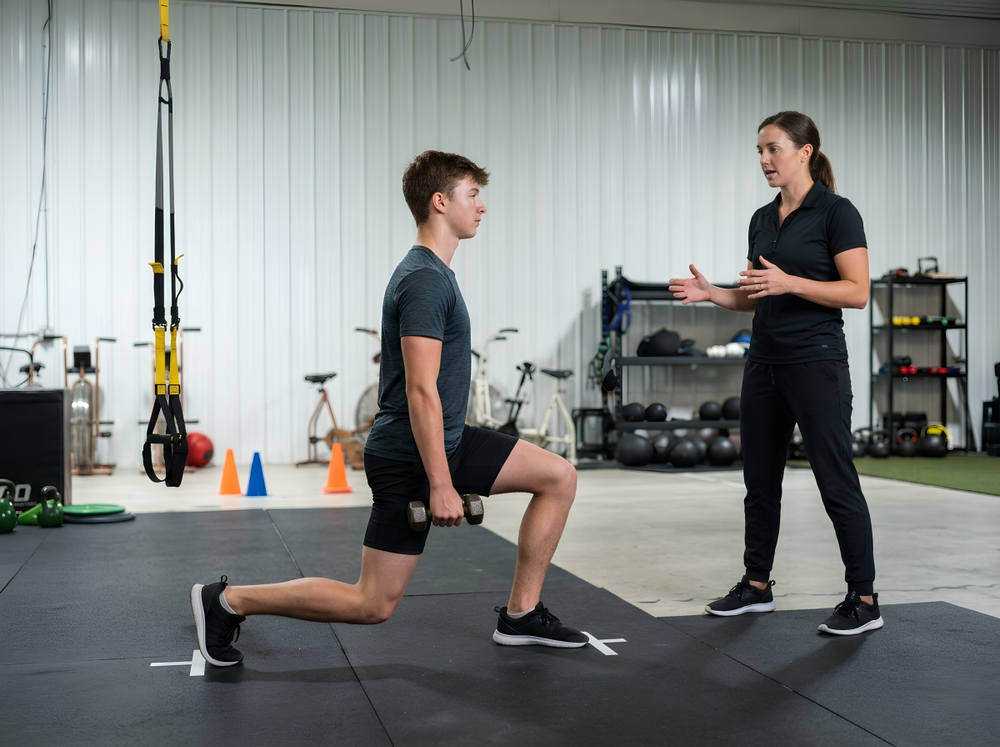
If your teen plays basketball, soccer, football, volleyball, or another competitive sport, you may have wondered whether it is time to introduce strength training.
Then comes the bigger question.
Is strength training actually safe for a growing athlete?
For most healthy adolescents, appropriately designed resistance training can be a safe and useful part of physical development when technique, qualified supervision, age-appropriate progression, and recovery are prioritized. The American Academy of Pediatrics reports that children and adolescents can gain strength with low injury rates when resistance training emphasizes proper technique and is well supervised.
That does not mean handing a teenager a heavy barbell and telling them to lift as much as possible.
Good youth strength training looks very different. It starts by teaching athletes how to control their bodies, perform fundamental movements correctly, and gradually handle appropriate resistance.
For parents in Elkhart considering Sports Performance Training for their teen, understanding that distinction is an important first step.
💪 Youth Strength Training Is More Than Lifting Heavy Weights
One misconception is that resistance training automatically means heavy weightlifting.
Resistance can come from many sources, including:
- Body weight
- Resistance bands
- Suspension trainers
- Kettlebells
- Free weights
- Machines
The American Academy of Pediatrics specifically recognizes resistance training as a broad category that includes body weight movements and other forms of resistance.
At Bare Fitness, the verified Sports Performance Training program incorporates TRX body weight suspension training, kettlebells, battle ropes, interval work, speed, agility, and mobility. The program is primarily designed for athletes ages 12 through 17, with athletes ages 10 and 11 considered individually.
That variety matters because developing an athlete requires more than simply increasing how much weight they can move.
🧠 What Should Teen Strength Training Actually Develop?
A teenager does not need to train like a professional athlete.
Young athletes are still learning how to coordinate their bodies. A productive program should build a foundation they can use as their sports become faster and more demanding.
Important areas can include:
- Movement control
- Foundational strength
- Balance
- Coordination
- Mobility
- Speed mechanics
- Agility
- Confidence performing exercises correctly
The National Strength and Conditioning Association describes long term athletic development as a process that emphasizes proper movement, physical literacy, motor skills, and foundational muscular strength as young people grow and mature.
This broader perspective is especially important for parents.
The goal should not simply be making your teen stronger this month. It should be helping them develop physical qualities they can continue building for years.
🏋️ Does Strength Training Stunt Growth?
This is one of the most persistent concerns surrounding youth resistance training.
Current guidance does not support the idea that properly designed and supervised resistance training inherently stunts a child’s growth.
The more relevant safety questions involve how the athlete is being trained.
Is the athlete supervised?
Are exercises appropriate for their current ability?
Have they learned the movement before resistance is increased?
Are they trying to lift maximal loads before they are ready?
Is training volume appropriate alongside practices and games?
The American Academy of Pediatrics emphasizes proper technique, qualified supervision, and developmentally appropriate programming when young people participate in resistance training.
In other words, the question should not simply be, “Is my teenager lifting weights?”
A better question is, “How is my teenager being taught to train?”
🚦 Technique Should Come Before Load
Imagine two teenage athletes performing a squat.
Athlete A is lifting a relatively heavy load but struggles to maintain control.
Athlete B uses a lighter resistance while demonstrating consistent technique through a comfortable range of motion.
The second athlete may have the better training opportunity.
Adding resistance only becomes useful when the athlete can manage it appropriately.
A sensible progression often looks like this:
Step 1: Learn the movement
The athlete practices fundamental movement patterns with body weight or very light resistance.
Step 2: Build consistency
The athlete demonstrates control repeatedly rather than performing the movement correctly only once.
Step 3: Introduce appropriate resistance
Resistance is added without sacrificing technique.
Step 4: Progress gradually
Training becomes more challenging as strength, coordination, and experience improve.
Step 5: Reassess
The coach evaluates whether the athlete is ready for further progression.
At Bare Fitness, Athlete Performance Training begins with an individual assessment of strength, speed, and agility before a customized path is developed.
That is much more informative than assuming every athlete of the same age needs the same workout.
⚽ Strength Training Should Complement the Sport
A basketball player and a soccer player may both benefit from becoming stronger, but their complete physical preparation will not necessarily look identical.
Bare Fitness specifically identifies basketball and soccer among its specialties while noting that its athlete program serves additional sports as well.
The program combines strength with speed, agility, mobility, and conditioning rather than treating strength as an isolated goal.
That approach reflects an important principle.
Gym performance should support the athlete rather than compete with their sport.
If a teenager is already practicing several days per week, playing games, traveling, and participating in school activities, adding more training without considering total workload can create unnecessary fatigue.
Good programming considers the entire athlete.
📋 A Parent’s Checklist for Evaluating a Youth Training Program
Before enrolling your teen in strength or performance training, ask these questions.
Is there qualified supervision?
Young athletes should not simply be left to figure out exercises themselves.
Does technique come before heavier resistance?
A good program rewards movement quality, not ego.
Is the program appropriate for the athlete’s age and experience?
A beginner should not automatically receive the same program as an experienced high school athlete.
Is there an assessment process?
Understanding an athlete’s starting point makes individualized programming more practical.
Does training include more than strength?
Depending on the athlete and sport, mobility, coordination, conditioning, speed, and agility may also deserve attention.
Is progression gradual?
The program should become more challenging as the athlete demonstrates readiness.
Does the coach consider sport practices and competition?
Training should fit into the athlete’s overall schedule rather than simply adding more fatigue.
Can the coach explain why an exercise is being used?
Parents should be able to understand the purpose behind the training.
If a program cannot answer these questions clearly, ask more questions before enrolling your athlete.
🏃 What About Athletes Who Already Practice Every Day?
More training is not automatically better.
The CDC recommends that children and adolescents ages 6 through 17 accumulate at least 60 minutes of moderate to vigorous physical activity each day, with muscle strengthening activity included on at least three days per week.
That recommendation describes overall physical activity, not a requirement for three formal weight room sessions.
A teen athlete may already accumulate significant activity through practices, games, physical education, and recreation.
Strength and performance training should therefore be integrated thoughtfully.
Recovery matters too.
Sleep, nutrition, hydration, school stress, practice demands, and competition schedules can all influence how prepared an athlete is for another challenging session.
🏀 A hypothetical basketball player with games on Friday and Saturday, for example, should not automatically perform the hardest lower body session on Thursday simply because that is the normal training day.
Programming should respond to the athlete’s actual schedule.
🍎 Nutrition Is Part of Supporting a Growing Athlete
Teen athletes need enough energy and nutrients to support growth, everyday life, sports, and training.
This is not the place for extreme dieting or copying an adult fitness influencer’s meal plan.
Bare Fitness states that nutrition support can vary based on the athlete’s needs, including guidance for athletes who need to gain weight while supporting sports performance.
Parents considering Nutrition Coaching should still involve an appropriate healthcare professional when a teen has a medical condition, suspected nutrient deficiency, eating disorder concerns, significant unexplained weight changes, or other clinical nutrition needs.
Training and nutrition should support development, not create unnecessary pressure around appearance.
When Should Parents Talk With a Healthcare Professional?
Most general youth fitness questions can begin with a qualified coach, but some situations deserve medical input before starting or significantly changing a program.
Talk with your child’s pediatrician or appropriate healthcare professional if your athlete has a significant medical condition, unexplained pain, an unresolved injury, or another health concern that could affect exercise participation.
The American Academy of Pediatrics also recommends medical consultation for certain cardiovascular conditions, uncontrolled seizure disorders, uncontrolled hypertension, and some other medical circumstances.
A strength coach should not replace medical diagnosis or rehabilitation.
Frequently Asked Questions
What age should a teen start strength training?
There is no single birthday that suddenly makes resistance training appropriate. Readiness depends on the young person’s ability to follow instructions, perform movements with control, and participate in an appropriately supervised program. Bare Fitness’s primary Sports Performance Training program is designed for ages 12 through 17, with ages 10 and 11 considered individually.
Should teen athletes lift as heavy as possible?
Maximum load should not be the starting goal. Technique, control, and appropriate progression should come first.
Can strength training make a teenager faster?
Strength can contribute to athletic development, but speed is a specific physical skill influenced by multiple factors. That is why a complete athlete program may combine strength with sprint mechanics, agility, coordination, and sport practice rather than relying on strength training alone.
How often should teen athletes strength train?
There is no universal schedule for every teenager. Frequency should consider age, experience, goals, sport practices, competition, and recovery. The American Academy of Pediatrics emphasizes developmentally appropriate programming rather than treating young athletes like smaller adults.
Help Your Athlete Build the Right Foundation
The best youth strength program is not the one with the heaviest weights or hardest workouts.
It is the one that teaches an athlete how to move, builds strength progressively, accounts for their sport and development, and gives them skills they can continue using as they mature.
For families in Elkhart, Bare Fitness offers Sports Performance Training built around individual assessment and a combination of strength, speed, agility, mobility, and conditioning.
If your athlete is ready for structured training, start by discussing their sport, goals, training history, and current schedule with the Bare Fitness coaching team.